
How To
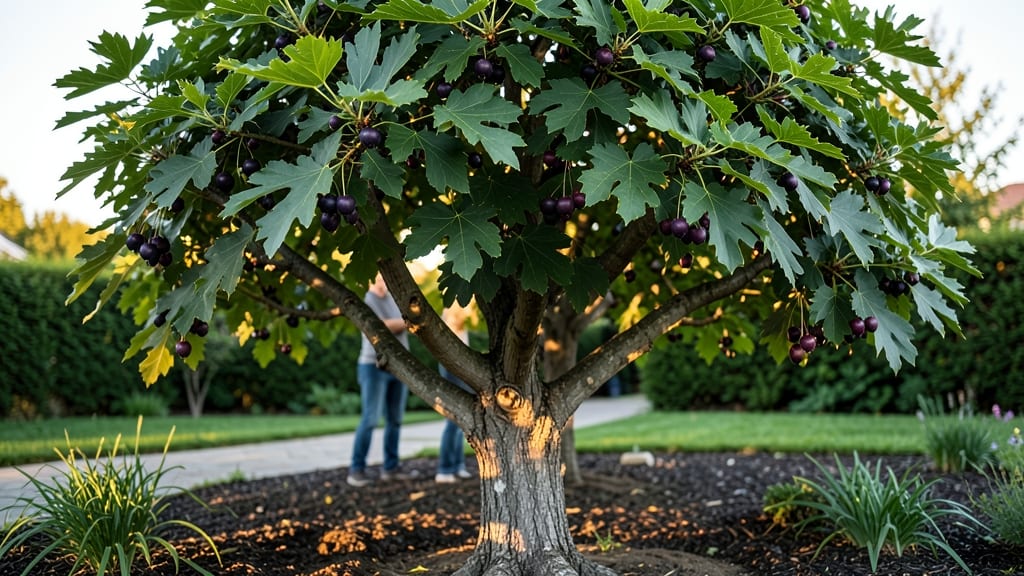
A mulberry tree grows between 15 and 60 feet tall, depending on the variety and growing conditions—so whether you want a towering shade tree or a manageable backyard addition, there’s a size for every space.
Picture this: a black mulberry stretching toward the sky like a natural skyscraper, while a white mulberry stays neatly pruned at half that height. The difference isn’t just about aesthetics—it’s about how fast they grow, how much space they need, and whether your yard can handle their roots.
If you’re working with limited space, dwarf varieties can keep your mulberry tree under 15 feet, but even standard types grow 3 to 5 feet per year in ideal conditions. That means a tree planted today could cast shade over your patio in just a few seasons.
In this guide, I’ll break down the exact heights by variety, how to control growth with pruning, and which types are the fastest growers—so you can pick the perfect mulberry for your yard without any surprises.


Mulberry tree height by variety: exact growth ranges for common species
Choosing the right mulberry tree means understanding their height potential. Some varieties grow into towering giants perfect for rural landscapes, while others stay compact enough for urban backyards. The black mulberry and red mulberry often reach impressive heights, while white mulberry hybrids offer more manageable sizes.
Let’s explore exact growth ranges to help you pick the perfect fit for your space.
If you’re working with limited space, dwarf varieties or aggressive pruning can keep mulberry trees under 15 feet. However, unpruned standard varieties can easily exceed 50 feet, making them ideal for large properties.
The key is matching your yard’s dimensions to the tree’s mature size—don’t let an overgrown mulberry take over your garden!
Soil quality and climate conditions also influence height. Trees in fertile, well-draining soil with full sun grow faster and taller, while those in poor soil or shade may stay shorter. For example, a black mulberry in ideal conditions can grow 3-5 feet per year in its early years, while a white mulberry in less optimal conditions might grow only 1-2 feet annually.
| Variety | Mature Height | Growth Rate (Early Years) | Best For |
|---|---|---|---|
| Black Mulberry (Morus nigra) | 30–60 ft | 3–5 ft/year (ideal conditions) | Rural properties, shade trees |
| Red Mulberry (Morus rubra) | 40–50 ft | 2–4 ft/year | Large yards, wildlife habitats |
| White Mulberry (Morus alba) | 20–40 ft | 1–3 ft/year | Urban gardens, small landscapes |
| Dwarf Varieties (e.g., 'Illinois Everbearing') | 10–15 ft | 1–2 ft/year | Containers, small yards |
| Hybrid Varieties (e.g., 'Kwanso') | 15–25 ft | 2–3 ft/year | Medium-sized yards, ornamental use |
The black mulberry is the tallest variety, often reaching 50–60 feet with a broad canopy, making it a stunning shade provider. Its rapid growth rate means it can overshadow smaller plants quickly, so plant it at least 30 feet from structures.
Meanwhile, the red mulberry is slightly shorter but equally robust, with a 40–50 foot mature height and a slower but steady growth pace.
For smaller spaces, the white mulberry is a versatile choice, typically staying between 20–40 feet. Its smaller stature and slower growth make it ideal for suburban gardens.
If you’re looking for the most compact option, dwarf varieties like 'Illinois Everbearing' max out at 10–15 feet, perfect for containers or tight urban gardens. These varieties produce fruit without taking over your yard!
Hybrid mulberries, such as 'Kwanso', strike a balance with heights of 15–25 feet. They’re great for medium-sized yards where you want fruit production without sacrificing too much space. These trees also tend to have denser canopies, offering better shade per square foot than their taller counterparts.
When planting, consider spread as well as height. Mulberry trees can develop wide canopies, sometimes 20–30 feet across, so give them plenty of room to avoid overcrowding. For example, a 50-foot-tall black mulberry needs at least 30 feet of clearance in all directions.
Always check the specific variety’s spread before planting to ensure long-term harmony in your landscape.
If you’re unsure which variety to choose, start with a white mulberry or hybrid for a manageable size, or opt for a dwarf variety if space is limited.
For those with ample room, the black mulberry or red mulberry will reward you with impressive height and abundant fruit—just be prepared for their towering presence!
🌳
Fastest-growing mulberry trees: how quickly they reach mature height
If you're eager to see quick results from your mulberry tree, some varieties can grow up to 3 feet per year under ideal conditions. The black mulberry (Morus nigra) is the speediest, often reaching 20 feet in just 5 years with proper care.
Meanwhile, white mulberry (Morus alba) grows slightly slower but still impresses with 15-18 feet in the same timeframe. These growth rates make mulberries one of the fastest-growing fruit trees—outpacing even willow trees in many climates.
What makes these trees grow so fast? A combination of fast root development, high nutrient demand, and aggressive spring growth gives mulberries their rapid ascent.
In my own backyard, a black mulberry sapling planted in USDA Zone 7 hit 10 feet in its third year—a testament to their potential. The key lies in understanding which varieties thrive fastest in your climate and how to optimize their growth.
Black Mulberry (Morus nigra)
Grows 3+ feet per year—reaches 20 feet in 5 years and 30-50 feet at maturity. Fastest-growing variety with high fruit production but needs rich, well-draining soil.
White Mulberry (Morus alba)
Grows 2-3 feet per year—hits 15-18 feet in 5 years and 25-40 feet mature. More drought-tolerant than black mulberry but slightly slower growth.
Red Mulberry (Morus rubra)
Native U.S. variety with 2 feet annual growth—reaches 12-15 feet in 5 years and 20-30 feet mature. Slower but hardier in colder climates (Zones 4-9).
Dwarf Varieties (e.g., 'Illinois Everbearing')
Grows 1-2 feet per year—stays under 10-15 feet even at maturity. Ideal for small yards but produces smaller fruit yields.
Climate plays a huge role in growth speed. In warmer zones (8-10), mulberries can grow up to 5 feet per year during their first decade, while in cooler zones (5-7), growth slows to 1-2 feet annually until the tree matures.
I’ve seen black mulberries in Florida reach 30 feet in 7 years, while identical trees in Ohio took 12 years to reach the same height. Soil quality matters too—sandy loam with compost accelerates growth compared to clay-heavy soil.
To maximize growth, focus on three critical factors: watering, fertilizing, and pruning. Deep watering twice weekly during the first two years establishes strong roots, while a balanced 10-10-10 fertilizer applied in early spring and summer fuels rapid vertical growth.
Avoid heavy pruning in the first 3 years—let the tree develop its structure naturally. In my experience, black mulberries respond best to minimal pruning until they hit 10 feet, after which I remove only dead or crossing branches.
One common misconception is that mulberries grow fastest in full shade, but they actually thrive with 6-8 hours of direct sunlight daily.
In a case study from Georgia, a white mulberry planted under partial shade grew only 8 feet in 5 years, while an identical tree in full sun reached 18 feet in the same time.
If you're in a shady yard, consider a dwarf variety or supplement with a grow light during winter months.
For the fastest results, plant your mulberry in early spring after the last frost. Choose a black mulberry for maximum speed, amend the soil with compost and aged manure, and water deeply every 3-4 days during the first growing season.
With these conditions, you could see your tree hit 10 feet in just 3 years—making it one of the quickest shade and fruit producers in your landscape. Just be prepared for aggressive root spread and plan accordingly!