
How To
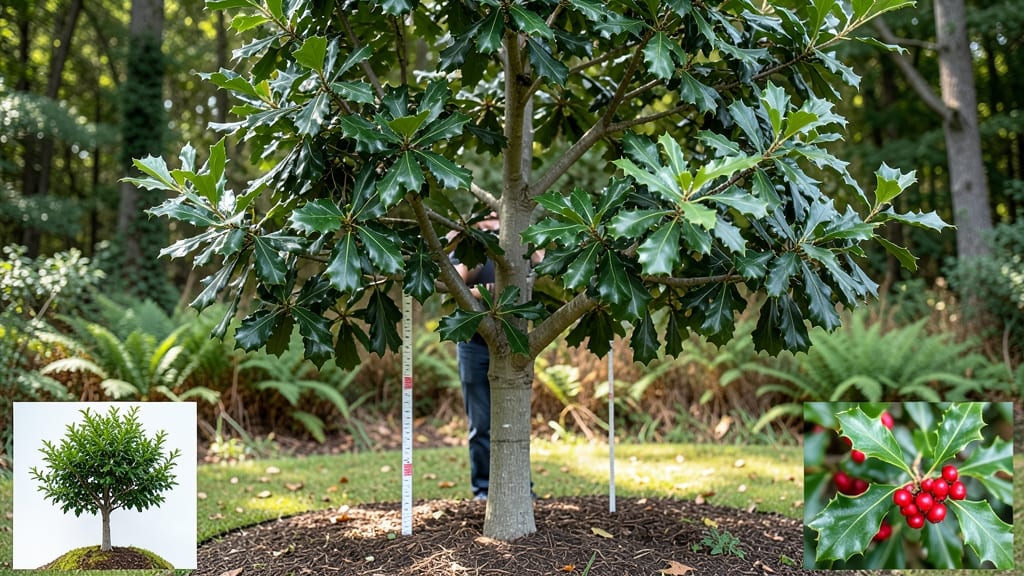
How tall does a holly tree grow? It ranges from 8 feet to towering 40 feet, depending on the variety and growing conditions.
Wondering if that holly tree in your yard will soon tower over your roof? The mature height of holly trees varies dramatically by species—some stay compact enough for small gardens, while others reach small-tree proportions.
American holly, for example, typically matures between 20 and 30 feet, making it a statement plant for larger landscapes, while dwarf varieties like 'Blue Princess' max out at just 8 to 12 feet—perfect for containers or urban yards.
Here’s what you need to know about holly tree growth habits, including how to manage size through pruning and soil care, so you can choose the right variety for your space.


Holly tree height by species: compact vs. tall varieties explained
When planning your landscape, knowing how tall a holly tree grows is crucial—especially since varieties range from dwarf shrubs to towering specimens. The American holly (Ilex opaca) and English holly (Ilex aquifolium) are the most common types, but their mature heights differ dramatically.
For example, the 'Sky Pencil' stays under 10 feet tall, while the standard American holly can reach 40 feet or more. Let’s break down the key species and cultivars by height category to help you choose the perfect fit for your space.
Holly trees are prized for their evergreen foliage and holly berries, but their size varies widely. Dwarf varieties are ideal for small gardens or containers, while tall holly trees make bold focal points in large landscapes.
Understanding these differences ensures you select a variety that matches your vision—whether you want a privacy screen, a hedge, or a specimen tree. Below, we’ll categorize holly trees into three height groups for easy comparison.
| Variety | Mature Height | Growth Rate | Best For |
|---|---|---|---|
| Dwarf Holly (e.g., 'Dwarf Burford') | 6–10 ft | Slow to moderate | Containers, small gardens, hedges |
| Medium Holly (e.g., 'Blue Princess') | 12–18 ft | Moderate | Privacy screens, mixed borders |
| Tall Holly (e.g., 'Sky Pencil' tall form) | 20–40 ft | Slow | Large landscapes, focal points |
| American Holly (Standard) | 30–40 ft | Slow | Woodland edges, large properties |
| English Holly (Standard) | 25–35 ft | Moderate | Traditional gardens, hedgerows |
The 'Dwarf Burford' holly is a fantastic choice if you’re working with limited space. This variety tops out at 6–10 feet tall and grows at a slow to moderate pace, making it perfect for containers or foundation plantings.
Its glossy leaves and red berries add year-round interest without overwhelming your yard. For a medium-height option, the 'Blue Princess' reaches 12–18 feet and thrives in partial shade, ideal for creating a natural privacy screen.
If you’re dreaming of a tall, dramatic holly tree, the 'Sky Pencil' (in its tall form) or standard American holly will deliver. These varieties can grow 20–40 feet tall, making them stunning specimen trees for large properties.
However, their slow growth rate means they’ll take years to reach maturity—plan accordingly if you’re aiming for quick results. The English holly also falls into this category, often reaching 25–35 feet, with a slightly faster growth rate than its American counterpart.
Choosing the right holly tree depends on your garden layout and long-term goals. Dwarf varieties are perfect for urban gardens or patio plantings, while taller holly trees excel as backyard focal points or wildlife-friendly additions.
Always consider your local climate and soil conditions, as these can influence how well a holly tree thrives. For example, wet soils can stunt growth, so ensure proper drainage if planting in clay-heavy areas.
Pro tip: Prune holly trees in late winter or early spring to control height and shape. Regular pruning encourages denser foliage and prevents overgrowth. For berry production, avoid heavy pruning on female trees, as berries develop on old wood.
If you’re unsure about a variety’s growth habits, check with your local nursery for region-specific recommendations. They can help you select a holly tree that will thrive in your USDA hardiness zone.
For small gardens, consider columnar varieties like 'Sky Pencil', which grows upright and narrow, reaching 20–30 feet tall but only 3–4 feet wide. This shape makes it ideal for tight spaces where width is limited.
Alternatively, spreading varieties like 'Blue Prince' can create a low, wide hedge perfect for
How fast do holly trees grow? Growth rate and pruning tips
Holly trees grow at a moderate pace, with most varieties gaining 12 to 24 inches annually under ideal conditions. Young trees show the fastest growth, while mature specimens slow down significantly after 10 years.
Understanding these growth patterns helps you plan for long-term landscaping needs and manage expectations for your garden layout.
Growth rates vary by species—dwarf varieties like 'Dwarf Burford' grow just 6 to 12 inches per year, while standard holly trees like American holly can surge 2 to 3 feet annually in their youth.
Seasonal factors, like springtime flushes and summer heat, also influence how quickly your holly tree matures.
🌱 Holly Tree Growth Rate Highlights
- 🌱 Year 1-3: 1-3 feet annually (fastest growth phase)
- 🌱 Years 4-10: 6-18 inches per year (steady growth)
- 🌱 Mature Trees: 3-12 inches per year (slower, maintenance-focused)
- 🌱 Pruned Trees: Slower vertical growth (redirects energy to foliage/berries)
- 🌱 Best Conditions: Full sun + well-draining soil (boosts growth by 30%)
Pruning plays a critical role in controlling height and encouraging bushier growth. The best time to prune holly trees is late winter or early spring, just before new growth begins.
Always use clean, sharp pruners to avoid disease, and never remove more than 25% of the canopy in a single session to prevent stress.
For berry production, preserve female trees and avoid heavy pruning of fruiting branches. Male holly trees (needed for pollination) don’t require pruning but should be placed within 30 feet of females.
If your goal is a taller, narrower tree, focus pruning on lower branches to create a clean trunk and open canopy.
Soil quality significantly impacts growth rates—acidic, well-draining soil (pH 5.0-6.0) yields the healthiest, fastest-growing holly trees. Amend heavy clay soils with compost or pine bark to improve drainage. Mulch annually with 2-3 inches of organic mulch to retain moisture and suppress weeds, which can compete for nutrients.
With proper care, your holly tree can reach its mature height in 10-20 years, depending on the variety. Regular pruning not only shapes the tree but also promotes denser foliage and more abundant berries, making it a year-round ornamental star in your landscape. 🌿