
Trees
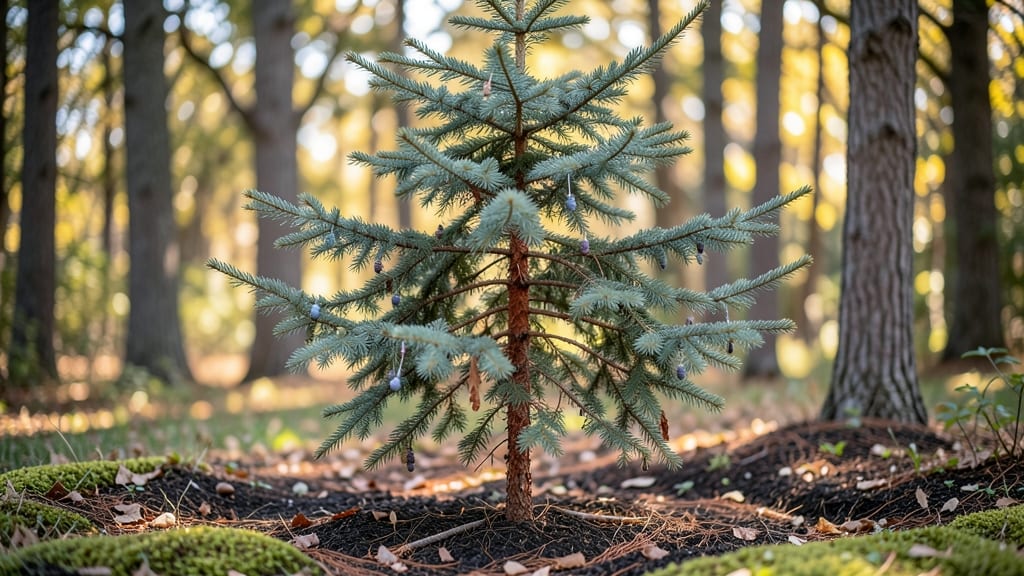
Sparse-branched evergreens turn your garden into a sculptural masterpiece. 🌲 These trees—like the stately Scots pine or airy white spruce—create natural focal points that work year-round, their open canopies letting light dance through while offering privacy and structure.
They’re the quiet stars of open landscapes, where their elegant silhouettes frame views and soften edges without overwhelming smaller plants.
What makes them special isn’t just their year-round greenery but their architectural versatility. A single Scots pine can anchor a meadow garden, while a cluster of white spruces creates a living privacy screen that still lets breezes through.
Their sparse branches also mean fewer leaves to rake, making them low-maintenance choices for busy gardeners. Pair them with ground covers like creeping thyme or ferns to fill the open spaces beneath.
You’ll love how they transform a blank space into a layered composition—think of the way sunlight filters through their branches in winter, casting intricate shadows on snow or evergreen shrubs below.
Their natural elegance works in both formal and wild gardens, and their slow growth means they’ll age gracefully for decades. For open areas, they’re the perfect way to add drama without density.
Whether you’re designing a new garden or refreshing an existing one, these trees bring textural contrast and seasonal interest without competing with other plants. Their unique structure also makes them ideal for small spaces where fuller trees would feel too heavy. Let’s explore how to place them for maximum impact!
Root Causes Behind Thin Canopies
When your evergreen tree sports fewer branches than expected, it’s rarely a sign of poor luck—it’s usually a response to specific environmental or biological stressors. Understanding these causes helps you address the issue before it worsens.
Below, we break down the most common reasons why evergreens develop sparse branches, along with the science behind them.
Evergreens rely on a balance between old and new growth to maintain their dense, lush appearance. When pruning becomes too aggressive—especially during the wrong season—you risk removing critical growth points (called terminal buds) that drive branch development.
- Why it happens: Pruning in late winter or early spring, when trees are still dormant, can stimulate new growth but also removes buds that would have supported next year’s branches. Over-trimming weakens the tree’s ability to produce lateral (side) branches, leading to a "broomstick" effect.
- Science behind it: Evergreens like pines and spruces grow in a pattern called monopodial branching, where the main stem dominates. Removing too much of the top growth forces the tree to redirect energy downward, but without proper spacing, side branches stay stunted.
- Actionable fix:
- Prune only in early summer (when new growth is already active) to avoid disrupting dormant buds.
- Use the "thirds rule": Never remove more than one-third of the tree’s foliage in a single session.
- Target dead or crossing branches first—never healthy growth.
Evergreens are drought-tolerant, but chronic water issues—whether from underwatering or soggy roots—can stunt branch development. Roots are the tree’s lifeline, and when they struggle, the canopy suffers.
- Why it happens:
- Drought stress: Shallow root systems (common in young trees or clay soil) can’t reach deep water reserves. The tree prioritizes survival over branch growth, leading to sparse, weak shoots.
- Overwatering/root rot: Compacted or poorly drained soil suffocates roots, cutting off nutrient and water flow. The tree diverts energy to repairing roots instead of expanding foliage.
- Science behind it: Water stress triggers the hormone abscisic acid (ABA), which signals the tree to conserve resources. This slows down cell division in meristems (growth zones), reducing branch density.
- Actionable fix:
- Test soil moisture: Stick your finger 3 inches deep—if dry, water deeply (1–2 inches per week). If soggy, improve drainage with organic matter (compost or mulch).
- Mulch properly: Apply 3–4 inches of mulch (wood chips or bark) around the base (but not touching the trunk) to retain moisture and regulate soil temperature.
- Consider deep root fertilization in early spring to boost root health.
Evergreens need full sun (6+ hours daily) and a steady supply of nutrients to grow thickly. When deprived, they revert to a "survival mode," producing sparse, weak branches.
- Why it happens:
- Shade competition: Tall buildings, other trees, or dense shrubs block sunlight, reducing photosynthesis. The tree can’t produce enough energy for robust branch growth.
- Nutrient imbalances: Poor soil (lacking nitrogen, phosphorus, or micronutrients like iron or zinc) leads to chlorosis (yellowing) and stunted shoots. Evergreens, especially needle-bearing types, are sensitive to soil pH (ideal: 5.0–7.0).
- Science behind it: Light deprivation reduces chlorophyll production, while nutrient deficiencies limit enzyme activity in meristems. Both scenarios slow down primary and secondary growth, leading to fewer, thinner branches.
- Actionable fix:
- Prune nearby overgrowth to improve light exposure. If the tree is permanently shaded, choose a shade-tolerant evergreen (e.g., Picea glauca ‘Conica’—dwarf Alberta spruce).
- Test soil pH and amend with:
- Acidic soil (pH <5.0)? Add elemental sulfur or pine fines.
- Alkaline soil (pH >7.0)? Use peat moss or sulfur-coated fertilizer.
- Fertilize in early spring with a slow-release, balanced fertilizer (e.g., 10-10-10 or 16-4-8). Avoid high-nitrogen fertilizers in fall—they encourage tender growth vulnerable to winter damage.
Evergreens stay green year-round, but their needles are vulnerable to desiccation (drying out) and freeze damage in harsh winters. When branches suffer winter stress, they may fail to regrow properly in spring.
- Why it happens:
- Winter burn: Needles lose moisture in dry, windy, or sunny winter conditions (especially in Zone 5 and below). The tree "prunes" damaged branches in spring, leaving gaps.
- Late frost damage: New growth emerging in early spring can be killed by sub-freezing temps, halting branch elongation.
- Science behind it: Cold stress triggers oxidative damage in needle cells, while wind increases transpiration rates (water loss). The tree’s survival mechanisms prioritize root and trunk protection over canopy expansion.
- Actionable fix:
- Prevent winter burn:
- Apply anti-desiccant spray (e.g., Wilt-Pruf) in late fall.
- Use burlap windbreaks on the west and north sides of the tree.
- Avoid pruning in late summer/fall—new growth is more susceptible to freeze damage.
- Protect from frost: Cover young trees with frost cloth during late spring freezes.
- Prevent winter burn:
Insects like spider mites, bark beetles, or sawflies and diseases such as root rot or needle blight can weaken evergreens, leading to patchy or missing branches.
- Why it happens:
- Pests: Insects feed on needles or cambium (the growth layer under bark), disrupting nutrient transport. The tree diverts energy to healing, stunting branch development.
- Diseases: F
Revitalize Your Tree’s Canopy
Restoring a lush, full look to an evergreen with sparse branches is achievable with the right care. Below, we break down the most common causes of thin foliage and provide practical, step-by-step solutions—plus prevention tips to keep your tree thriving year-round.
---
Fix: Trim strategically to encourage dense growth while avoiding stress.
1. 🔪 Prune at the Right Time - Best time: Late winter or early spring (before new growth starts). - Avoid heavy pruning in fall—this can leave branches vulnerable to winter damage. - Pro tip: Use sharp, sterilized pruners to prevent disease spread.
2. 📏 Follow the "One-Third Rule" - Never remove more than one-third of the tree’s foliage in a single session. - Focus on thinning out (removing entire branches) rather than shearing (cutting back uniformly).
3. 🌿 Target Dead or Crossing Branches - Remove branches that: - Rub against each other (creates wounds). - Are dead, diseased, or broken. - Grow inward (blocking sunlight to inner foliage).
4. 🌟 Encourage New Growth - After pruning, apply a balanced, slow-release fertilizer (10-10-10 or similar) to support recovery. - Water deeply before and after pruning to reduce shock.
Prevention: ✅ Schedule light maintenance pruning every 2–3 years instead of drastic cuts. ✅ Train young trees early to grow with an open, airy structure (avoids overcrowding).
---
Fix: Optimize sunlight exposure and adjust placement if needed.
1. 📍 Assess Your Tree’s Sunlight Needs - Most evergreens (like pines, spruces, or junipers) thrive in full sun (6+ hours/day). - If your tree is in shade, consider relocating it (if possible) to a sunnier spot.
2. 🌿 Prune Nearby Obstructions - Remove overhanging branches from taller trees or dense shrubs blocking light. - Trim back buildings, fences, or structures that cast permanent shade.
3. 💡 Supplement with Grow Lights (For Potted Trees) - If your evergreen is in a container, use a full-spectrum LED grow light for 12–14 hours/day in winter.
Prevention: ✅ Plant evergreens in south- or west-facing areas for maximum sunlight. ✅ Avoid planting near large deciduous trees that drop leaves in fall (temporary shade can stress evergreens).
---
Fix: Adjust irrigation and improve soil health for better nutrient uptake.
1. 💦 Check Moisture Levels - Deep watering (1–2 inches per week) is key—especially in first year after planting. - Test soil moisture: Stick your finger 3–4 inches deep; if dry, water thoroughly. - Warning: Overwatering can suffocate roots—ensure good drainage (mulch but don’t mound soil at the trunk).
2. 🌱 Amend Compacted or Poor Soil - Evergreens prefer well-draining, slightly acidic soil (pH 5.0–7.0). - Mix in compost or peat moss to improve texture and fertility. - For sandy soil, add organic matter (like leaf mold) to retain moisture.
3. 🍄 Address Fungal or Root Problems - If soil is waterlogged, raise the tree’s root zone with gravel or amend soil with perlite. - Apply fungicide (copper-based) if you spot root rot or needle blight.
Prevention: ✅ Mulch properly: Spread 2–3 inches of mulch (wood chips or pine straw) 3 inches away from the trunk. ✅ Avoid heavy foot traffic around the base—compacts soil and damages roots.
---
Fix: Identify the culprit and treat accordingly.
| Symptom | Likely Cause | Solution | |---------------------------|---------------------------|--------------| | Yellowing needles | Spider mites, aphids | Spray with neem oil or insecticidal soap. | | Brown, curling needles| Bagworms, sawfly larvae | Handpick bags or use Bt (Bacillus thuringiensis) spray. | | Oozing sap or holes | Bark beetles, borers | Prune infested branches below the damage and treat with systemic insecticide. | | Fungal spots | Needle blight, rust | Apply copper fungicide and remove infected debris. |
Prevention: 🔍 Inspect trees regularly (especially in spring/summer). 🌿 Encourage natural predators (ladybugs, birds) by planting pollinator-friendly shrubs nearby.
--- Fix: Boost soil fertility with targeted amendments.
1. 📊 Test Your Soil - Use a DIY soil test kit (available at garden centers) or send a sample to a local extension office. - Common deficiencies in evergreens: - Iron (yellow needles) → Apply chelated iron. - Nitrogen (slow growth, pale green) → Use slow-release nitrogen fertilizer (like blood meal). - Magnesium (yellowing between veins) → Add Epsom salt (1 tbsp per gallon of water, sprayed on foliage).
2. 🍃 Use Organic Fertilizers - Fish emulsion (for quick nitrogen). - Bone meal (for phosphorus, aids root growth). - Kelp meal (for micronutrients and stress relief).
Prevention: ✨ Fertilize in early spring (before new growth) and late summer (for fall recovery). ✨ Avoid over-fertilizing—can burn roots and attract pests.
--- Fix: Accept the tree’s maturity and enhance its natural beauty.
1. 🌲 Embrace the Tree’s Form - Some evergreens (like ponderosa pines or Italian cypress) naturally grow with sparse, airy canopies. - Solution: Let it be! Focus on pruning to shape rather than forcing density.
2. 🎨 Use Strategic Plantings - Pair your evergreen with understory plants (like boxwoods or heuchera) to fill gaps visually. - Add colorful annuals at the base for a lush, layered look.
3. 🌟 Lighten Up with Decor - Hang solar-powered fairy lights or ornamental ribbons to draw the eye upward. - Place a decorative pot or sculpture near the base to balance the open structure.
Prevention: 🌿 Choose the right tree for your space—research mature size before planting!
--- 💡 Mulch like a pro: Keep mulch even and loose—don’t let it pile against the trunk. 🌡️ Protect from winter burn: In dry climates, water deeply before the first frost and apply anti-desiccant spray. 🎯 Monitor yearly: Take photos in spring/summer to track growth and catch issues early.
With these fixes, your evergreen will gradually fill out, offering year-round structure and elegance to your garden. 🌲✨
Frequently asked questions
Why do some evergreens naturally have sparse branches?
Many evergreens, like Scots pine or Italian cypress, grow with naturally open canopies as part of their species characteristics. Their sparse branches create dramatic architectural interest and allow sunlight to filter through, which is ideal for open garden designs. These trees often develop this structure to reduce wind resistance in their native habitats.
Can I prune an evergreen with sparse branches to make it denser?
Pruning can help encourage denser growth, but be cautious—never remove more than one-third of the foliage in a single session. Focus on thinning out dead or crossing branches rather than shearing. The best time to prune is late winter or early spring when the tree is just starting to wake up from dormancy.
What's the best way to pair sparse-branched evergreens with other plants?
Use understory plants like boxwoods, heuchera, or ferns to fill the open spaces beneath. Add colorful annuals at the base for contrast, and consider ornamental grasses that sway in the breeze to create movement. This creates a layered, textured look that highlights the tree's natural elegance.
Are there any evergreens with sparse branches that work well in small gardens?
Dwarf varieties like Picea glauca 'Conica' (dwarf Alberta spruce) or Chamaecyparis lawsoniana 'Ellwoodii' (Ellwood cypress) grow slowly and maintain their airy structure while staying compact. These work beautifully in containers or small spaces without overwhelming the landscape.
How do I prevent winter damage to my sparse-branched evergreen?
Apply an anti-desiccant spray like Wilt-Pruf in late fall to protect needles from drying out. Use burlap windbreaks on the west and north sides to shield from harsh winds. Avoid pruning in late summer or fall, as new growth is more vulnerable to freeze damage. Water deeply before the first frost to help the tree establish root strength.