
Pruning
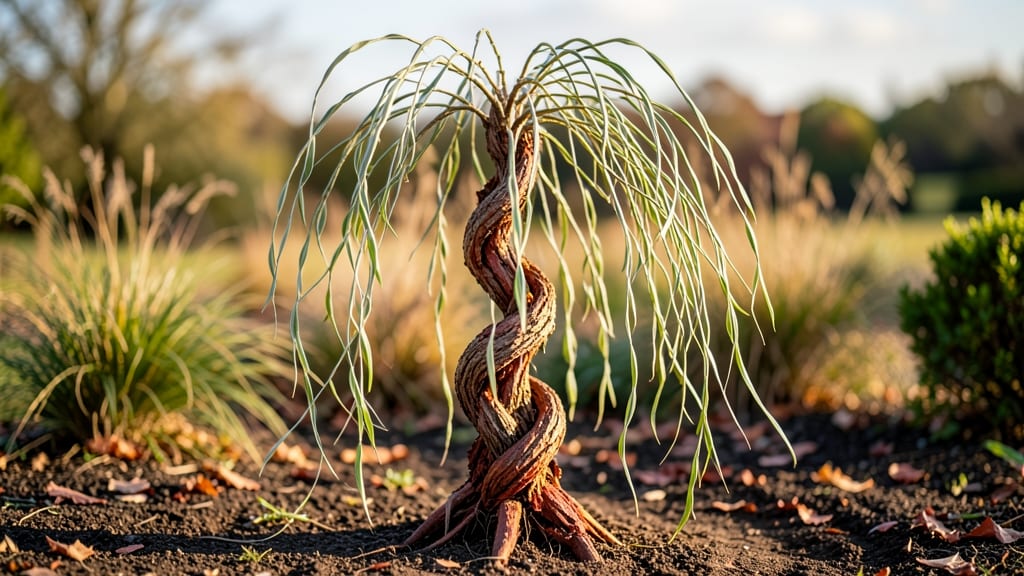
The corkscrew willow tree pictures reveal why this living sculpture captivates gardeners every season. 🌿 I planted mine near the pond last spring, and now it's the centerpiece of our backyard—its twisted silhouette stands out against the sky, even when leafless in winter.
This tree thrives in moist soil and full sun, making it perfect for water gardens or alongside streams. The branches naturally spiral as they grow, eliminating the need for pruning to maintain its signature look.
In spring, fresh green leaves appear along the corkscrews, while autumn brings golden hues that glow in the fading light.
For small spaces, consider a dwarf variety—it still delivers that dramatic form without overwhelming your landscape. Pair it with hostas or ferns for contrast, or let it shine alone as a bold statement piece. The visual impact comes from its pure, architectural beauty.
Works equally well in formal gardens or wild, natural settings. Whether you choose a single specimen or a grove of them, these trees become conversation starters that keep giving year after year.
📚 In This Guide
- What you need
- Instructions
- Tips and common mistakes
- Wrapping up and next steps
What you need
- ● Camera or Smartphone: A DSLR, mirrorless camera, or high-quality smartphone with a good lens (e.g., iPhone 13+, Samsung Galaxy S22+, or a 12MP+ camera).
- ● Tripod: A lightweight, sturdy tripod (e.g., Manfrotto Pixi Evo or Joby GorillaPod) to stabilize shots, especially in windy conditions.
- ○ Wide-Angle Lens (Optional but Recommended): A 10-24mm or 16-35mm lens to capture the full grandeur of the tree’s twisted branches.
- ● Polarizing Filter: Reduces glare from sunlight reflecting off leaves or water (if near a pond/stream).
- ● External Flash or Reflector: A softbox or portable flash (e.g., Neewer Speedlight) to brighten shadows on overcast days.
- ● Pruning Shears (If Editing Branches): Bypass pruners (Fiskars Ergo) for trimming overgrown or obstructive branches safely.
- ● Notebook & Pen: To jot down lighting conditions, angles, or ideas for future shoots.
- ● Drone (e.g., DJI Mini 2): For aerial perspectives of the tree’s sprawling form.
- ● ND Filters: Long-exposure shots of the tree swaying in the breeze.
- ● Macro Lens: To highlight intricate details of bark or buds up close.
- ● Portable Power Bank: Ensures your device stays charged during long shoots.
- ● Weather-Proof Gear: A rain cover for your camera or a waterproof bag if shooting near water.
- ● Location Access: Permission to photograph on private property or a public park with corkscrew willows.
- ● Best Time to Shoot: Early morning or late afternoon for soft, golden light.
- ● Overcast days to diffuse harsh shadows.
- ● Safety Gear: Gloves (for handling branches) and closed-toe shoes (if pruning).
- ● Backup Storage: Extra memory cards or cloud backup (e.g., Google Photos, Adobe Lightroom).
How to select and plant a striking corkscrew willow tree
This dramatic tree makes a statement—here's how to choose and plant one that thrives.
🌱 Step 1: Choose the Right Variety and Location
Corkscrew willows (Salix matsudana 'Tortuosa') thrive in full sun with at least 6 hours of direct light daily. Look for a site with well-draining soil—they hate soggy roots. I always check for overhead power lines first, since mature trees reach 20-30 feet tall with a 15-20 foot spread.
Young trees come in 1-3 gallon containers. Lift the pot to check root health—healthy roots should be white and dense, not circling the container. If you spot any brown or mushy roots, skip that plant. The twisty branches start developing in young trees, so choose a specimen with noticeable corkscrew patterns in the upper branches.
🪴 Step 2: Prepare the Planting Hole and Amend Soil
Dig a hole twice as wide as the root ball but no deeper. The top of the root ball should sit 1-2 inches above ground level—this prevents water from pooling around the trunk. I always loosen the sides of the hole with a shovel to encourage root spread.
Mix the native soil with 1 part compost (from your 3 cubic feet supply) to improve drainage and fertility. Avoid heavy amendments like peat moss—they can compact and suffocate roots. Work the amended soil into the hole, creating a slight mound in the center where the root ball will sit.
☀️ Step 3: Plant and Stake for Stability
Remove the tree from its container and gently loosen the roots if they're circling. Place the root ball on the mound, then backfill with the amended soil, tamping lightly as you go. Water deeply to settle the soil—you'll see the ground level drop as it absorbs moisture.
Install two stakes on opposite sides of the tree, positioned 6-8 inches from the trunk. Use soft tree ties (not wire) to secure the trunk at a 45-degree angle to the stake. This prevents bark damage as the tree grows. Mulch around the base with 2-3 inches of wood chips, keeping it 6 inches away from the trunk to prevent rot.
💧 Step 4: Water and Monitor Growth
Water deeply every 2-3 days for the first 4 weeks, until the top 6 inches of soil feels moist. Corkscrew willows need 1-2 gallons per watering to establish roots. After that, reduce to once a week unless your area experiences drought conditions. You'll know it's time to water again when the soil feels dry 2 inches below the surface.
Watch for new growth in spring—healthy branches should show green tips by early April. If you notice yellowing leaves or wilting, it's usually a sign of overwatering. These trees tolerate dry spells better than soggy soil. Prune only to remove dead or crossing branches in late winter, before new growth begins.
Tips & tricks for planting a striking corkscrew willow tree
Between us, planting a corkscrew willow is easier than you think—once you know these game-changing details. Here's what nobody tells you about making your tree thrive from day one.
Location is Everything: That 6-hour sunlight requirement is non-negotiable—these trees need full sun to develop their signature twisty branches. I've seen them planted in partial shade, and while they survive, the branches lose their dramatic curl. Check your yard's sunlight patterns throughout the day, especially in winter when days are shorter. A south-facing spot gets the most consistent light.
Root Health Check: When you lift that 1-3 gallon container, don't just glance at the roots—really examine them. Healthy roots should be white and dense, not circling the pot like a snake. I've planted trees with root-bound roots, and they struggle for years to grow properly. If you see any brown or mushy roots, walk away from that plant—it's already stressed. Look for trees where the roots spread naturally outward from the center.
Planting Depth Matters: That 1-2 inch elevation above ground level isn't just a suggestion—it's crucial for preventing rot. The root flare (where the roots spread from the trunk) should be visible above the soil line. If you bury it too deep, water pools around the trunk and causes the roots to suffocate. Think of it like planting a tree in a bowl—you want water to run off, not pool up.
Mulch Like a Pro: Those 2-3 inches of wood chips aren't just for looks—they regulate soil temperature and retain moisture. But here's the secret: keep that mulch 6 inches away from the trunk. Piling it against the bark traps moisture and creates the perfect environment for rot. I've seen beautiful trees ruined by well-meaning gardeners who didn't follow this simple rule. Think of it as creating a donut of mulch around your tree, with the trunk as the hole.
Pro Tips for Corkscrew Willow Tree Pictures
- Between us, planting a corkscrew willow is easier than you think—once you know these game-changing details. Here's wh...
- Location is Everything: That 6-hour sunlight requirement is non-negotiable—these trees need full sun to develop their...
- Root Health Check: When you lift that 1-3 gallon container, don't just glance at the roots—really examine them. Healt...
Frequently asked questions
Got questions about the stunning corkscrew willow tree? You’re not alone! Below are some of the most common inquiries—plus practical answers to help you care for (or admire) this unique tree.
How fast does a corkscrew willow grow?
A corkscrew willow grows at a moderate to fast pace, typically adding 12–24 inches per year under ideal conditions. In the first few years, growth is especially rapid, but mature trees slow down. For a 10-foot tree, expect it to take about 5–7 years—but patience pays off with those iconic twisted branches!
Can a corkscrew willow survive winter?
Yes! Native to USDA Zones 4–9, this tree is highly cold-hardy. Young trees may need winter mulch (2–3 inches) to protect roots, but mature corkscrew willows handle frost, snow, and even light freezes like a champ. Just avoid planting in waterlogged soil—they prefer moist but well-drained areas.
Do I need to prune a corkscrew willow?
Pruning is minimal—the tree’s signature twist is natural! Remove only dead, diseased, or crossing branches in late winter/early spring. Avoid heavy pruning, as it can disrupt the tree’s shape. For maintenance, a light trim every 2–3 years keeps it tidy without sacrificing its charm.
Are there alternatives to a corkscrew willow?
If you love the look but need a lower-maintenance option, consider:
- Weeping Willow – Fast-growing but less structured.
- Dwarf Corkscrew Hazelnut – Compact with twisted branches (great for small yards!).
- Contorted Filbert – Similar zigzag pattern, drought-tolerant.
- Japanese Snowbell – Ornamental with unique branching.
Why are my corkscrew willow branches turning brown?
Brown branches usually signal one of three issues:
- Overwatering – Roots need moisture but not soggy soil. Amend clay soil with compost.
- Pests (e.g., aphids, willow borers) – Spray with neem oil or insecticidal soap if you spot chewed leaves.
- Winter burn – Young trees may scorch in harsh sun after thaw. Apply anti-desiccant spray in late fall.
Wrapping up and next steps
The corkscrew willow tree isn’t just a stunning landscape feature—it’s a living work of art that brings drama and texture to any garden. With its twisted, spiraled branches and lush foliage, this tree is perfect for adding visual interest while requiring minimal upkeep.
Whether you’re a seasoned gardener or a beginner, its unique beauty makes it a worthwhile addition to your outdoor space.
Ready to transform your yard? Start by browsing our corkscrew willow tree pictures for inspiration, then take the next step—visit a local nursery or reputable online seller to bring this eye-catching tree home! 🌿✨