
Watering
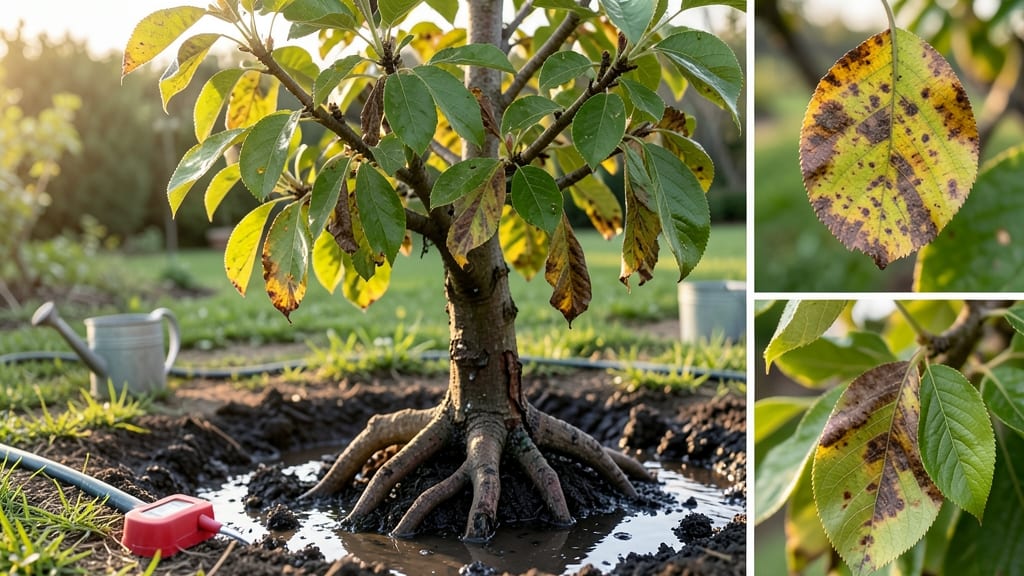
Your cherry tree’s drooping leaves and mushy roots might mean you’re drowning it—not quenching its thirst, revealing the signs of cherry tree overwatering. 🌳 Overwatering is sneaky: one day your tree looks fine, the next its roots suffocate, and yellow leaves rain down like autumn.
The damage starts underground long before you see wilting branches.
First, check the soil—it should feel like a damp sponge, not a soggy washcloth. Roots need air, and too much water cuts off their oxygen. Look for mushrooms sprouting at the base (a red flag!) or leaves that yellow and curl at the edges.
These signs mean your tree’s struggling to breathe, and without action, root rot can kill it in weeks.
Cut back on watering immediately: let the top 2-3 inches of soil dry out between drinks. Mulch helps regulate moisture, and consider aerating compacted soil to improve drainage. With the right adjustments, your tree can bounce back—just don’t let the cycle repeat.
Overwatering often mimics disease or underwatering, so dig deeper (literally) before treating symptoms. A quick soil check saves your tree from permanent damage. Here’s how to tell for sure—and fix it fast.
Root Causes of Overwatering
When your cherry tree starts showing signs of distress like drooping leaves or mushy roots, it’s often a cry for help—not too little water, but too much. Overwatering disrupts the delicate balance of oxygen, nutrients, and moisture that roots need to thrive.
Let’s break down the key reasons why this happens, so you can adjust your watering habits before it’s too late.
Cherry trees, especially those in containers or heavy clay soils, struggle when water pools around their roots instead of draining away. Here’s why:
- Compacted soil: Clay or dense soil repels water, creating soggy pockets where roots suffocate. Test it: Dig a small hole near your tree—if water sits for more than 30 minutes, drainage is poor.
- Lack of organic matter: Soil without compost or mulch compacts over time, trapping excess moisture. Roots in waterlogged soil can’t absorb oxygen, leading to anaerobic conditions—a deadly environment for them.
- Container constraints: Pots without drainage holes act like bathtubs, drowning roots. Even "self-watering" containers can over-saturate if not monitored.
💡 Pro Tip: Amend heavy soil with perlite, sand, or aged compost to improve aeration. For containers, ensure holes are present and use a well-draining potting mix.
Many gardeners assume "more water = healthier tree," but cherry trees (especially dwarf varieties) have shallow, sensitive root systems. Here’s how schedules backfire:
- Ignoring weather: Watering on a fixed schedule (e.g., every Tuesday) doesn’t account for rain, humidity, or temperature. Example: A 2-inch rainfall in spring can render your weekly watering redundant.
- Light, frequent watering: Short, shallow waterings encourage roots to stay near the surface, where they’re more prone to rot. Deep, infrequent watering (1–2 times per week in dry spells) trains roots to grow deeper and stronger.
- Automatic systems gone rogue: Drip irrigation or soaker hoses left running too long can flood the root zone, especially in sandy or loamy soils that absorb water quickly but don’t release it fast enough.
🌡️ Actionable Fix: Use the finger test: Stick your index finger 2–3 inches into the soil. If it’s damp, wait. If dry, water deeply until moisture reaches 6–8 inches down.
Sometimes, overwatering is a side effect of Mother Nature. These conditions make it harder for soil to dry out:
- High humidity: Moist air slows evaporation, keeping soil damp longer. In tropical or rainy climates, roots may never dry out between waterings.
- Shade or mulch overload: Thick mulch (over 3 inches) or dense shade from nearby trees can smother soil, trapping heat and moisture. Result: Fungal growth and root rot.
- Seasonal shifts: Spring and fall bring cooler temps and slower evaporation. A watering schedule that worked in summer may drown your tree in these seasons.
✨ Adaptation Tip: Reduce watering by 30–50% in humid months. In shaded areas, use straw mulch (which allows airflow) instead of wood chips.
Understanding these causes is the first step to saving your cherry tree. Next, we’ll explore how to diagnose the damage and revive it—before it’s too late.
Revive Your Cherry Tree Fast
Overwatering can feel like a silent killer for your cherry tree—until it’s too late. But don’t panic! With the right steps, you can nurse your tree back to health and keep it thriving.
Below, we’ve mapped out practical fixes for each overwatering symptom, plus prevention tips to avoid future soggy soil disasters.
---
Cause: Roots drowning in excess water, cutting off oxygen and nutrients. Solution: - Stop watering immediately and let the top 2–3 inches of soil dry out completely before watering again. 💧➡️🌞 - Improve drainage by amending the soil with perlite, sand, or compost (aim for a 50/50 mix with existing soil). A well-draining blend prevents waterlogging. - Prune affected leaves (but not branches) to redirect energy to healthier growth. Use sterilized pruners to avoid disease. ✂️🛡️ - Apply a balanced fertilizer (10-10-10) once the soil is dry to replenish lost nutrients. Follow label instructions for dosage.
💡 Pro Tip: If your tree is in a container, drill drainage holes in the bottom if missing. No holes? Repot into a larger container with fresh, well-draining soil.
---
Cause: Root rot from prolonged soggy conditions, often accompanied by a foul smell. Solution: - Remove the tree carefully from its pot (or dig around the base if planted in ground) and rinse the roots with water to dislodge excess soil. 🌊🌿 - Trim black, mushy roots with clean shears—only keep firm, white or light-brown roots. Healthy roots should snap slightly when bent, not squish like overcooked noodles. 🍜➡️❌ - Repot in fresh, sterile potting mix (or replant in a new spot with amended soil). Add sphagnum moss or coconut coir to boost aeration. - Hold off on watering for 5–7 days to let roots recover. Then, water sparingly—only when the top inch of soil is bone-dry.
⚠️ Warning: If more than 50% of roots are rotten, the tree may not survive. Consider propagating from healthy cuttings if it’s a young tree.
---
Cause: Waterlogged roots can’t absorb moisture, leading to dehydration-like symptoms. Solution: - Check soil moisture with your finger—if it’s damp 2+ inches down, wait before watering. Use a moisture meter for accuracy. 📏💧 - Provide shade if your tree is in direct sun. Overwatered trees struggle to regulate temperature. A light shade cloth can help. ☀️➡️🌳 - Water deeply but infrequently: When you do water, soak the root zone slowly (1–2 gallons for mature trees) to encourage deep root growth. Avoid shallow, frequent watering. 🚰💦 - Aerate compacted soil with a garden fork if planted in ground. Loosen soil 6–12 inches deep to improve oxygen flow.
🌡️ Pro Tip: Mulch around the base (but keep it 2–3 inches away from the trunk) to retain moisture without suffocating roots. Use wood chips or straw—avoid plastic mulch.
---
- Water in the morning (6–10 AM) to allow foliage to dry before evening, reducing fungal risks. 🌅⏰ - Use a rain gauge or weather app to track rainfall—adjust watering accordingly.
No need to water if rain provides 1 inch of moisture/week. - Group plants with similar needs (e.g., other fruit trees) to streamline care. Cherry trees prefer moderate moisture—don’t treat them like thirsty succulents! 🌿👫 - Install a soil moisture sensor ($15–$30) to monitor conditions in real time.
No more guesswork! 📱💡
--- ✨ Final Thought: Recovery takes time—be patient! With adjusted watering habits and proper soil care, your cherry tree can bounce back stronger. And next season? You’ll be the overwatering whisperer in your neighborhood. 🎤🌳
Frequently asked questions
How can I tell if my cherry tree has root rot from overwatering?
Look for black, mushy roots that smell foul when pulled from the soil. Healthy roots should be firm and light brown. If you see white, cottony fungal growth at the base of the trunk, that’s another red flag. Act fast by trimming affected roots and repotting in fresh, well-draining soil.
Why are my cherry tree leaves yellowing but staying attached?
This classic overwatering sign happens when roots can’t absorb nutrients due to waterlogged soil. Check the soil—if it’s soggy 2+ inches down, you’re overdoing it. Yellow leaves (especially on lower branches) often mean the roots are suffocating. Let the soil dry completely before watering again.
Can I save my cherry tree if the soil smells like rot?
Yes, but act immediately! Remove the tree, rinse the roots, and trim away any black, mushy sections. Repot in sterile, fast-draining mix and withhold water for 5-7 days. If over 50% of roots are rotten, recovery is unlikely—but young trees often bounce back with proper care.
How often should I water a newly planted cherry tree?
Water deeply 2-3 times per week for the first month, then taper to once a week. The key is letting the top 2-3 inches dry out between waterings. Use your finger to check moisture—if it’s damp below the surface, wait. Mature trees need even less frequent watering.