
Diseases
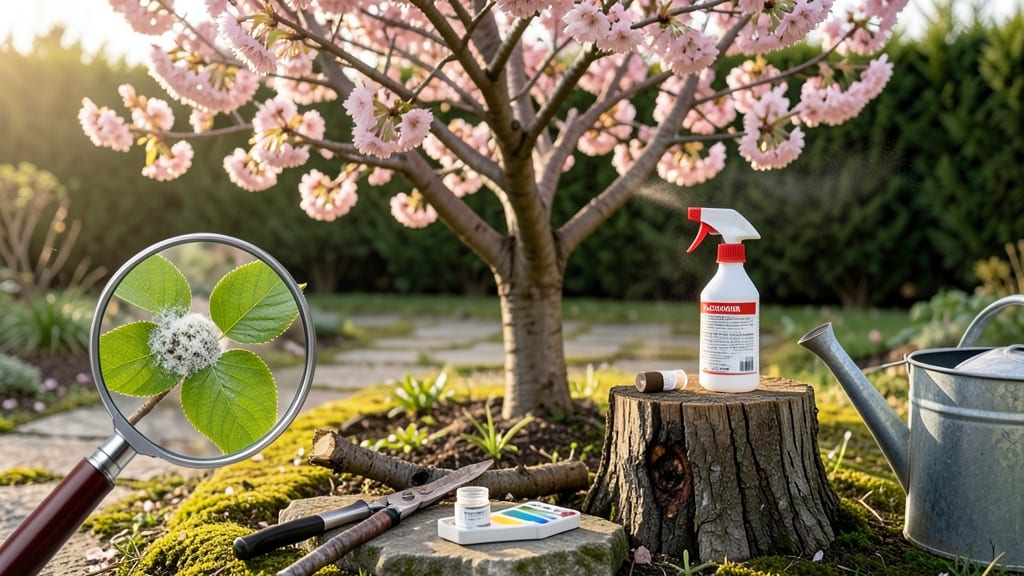
Your cherry blossom tree’s pink blooms shouldn’t signal trouble—but cherry blossom tree diseases often do. 🌸 I’ve seen bacterial canker turn vibrant branches into weeping sores, and powdery mildew smother leaves faster than a spring rain.
The good news? Catching these diseases early means your tree stays healthy and keeps putting on that stunning spring show year after year.
Most problems start with stress—overwatering, poor drainage, or weak branches from winter storms. Bacterial canker lurks in wounds, while powdery mildew thrives in humid shade. Root rot sneaks in when soil stays soggy too long.
The key? Prevention like pruning in dry weather and choosing disease-resistant varieties (like ‘Okame’ or ‘Kanzan’).
Once you spot symptoms—oozing cankers, white powder on leaves, or mushrooms at the base—act fast. Organic sprays with neem oil or copper fungicide can stop mildew, while pruning out infected branches (and sterilizing tools!) tackles canker. Healthy soil with compost and proper watering keeps roots strong and resistant.
Think of your tree like a favorite spring outfit—it needs regular care to stay show-stopping. With these steps, you’ll keep your blossoms bright, your branches sturdy, and those pink clouds coming back every spring. Let’s get your tree back to its best!
Root Causes Behind Tree Struggles
Cherry blossom trees are stunning symbols of spring, but their health can quickly decline when diseases strike. Understanding why these issues arise is the first step to prevention. Below, we break down the key factors that make your tree vulnerable, from microscopic invaders to environmental stress.
Fungi are the #1 culprit behind cherry blossom diseases, thriving in moist, warm conditions. Here’s how they exploit your tree:
- Overhead Watering: Splashing water onto leaves and bark creates the perfect fungal breeding ground. Botryosphaeria and Cytospora (common in cankers) spread rapidly when surfaces stay damp for more than 6 hours.
- Poor Air Circulation: Dense foliage or nearby structures trap humidity, allowing Powdery Mildew (a white fungal film) to blanket leaves, blocking sunlight and stunting growth.
- Weakened Tree Defenses: Stress from drought, poor soil, or recent pruning opens wounds where fungi like Anthracnose (causing leaf spots) can invade.
Pro Tip: 🌡️ Monitor humidity—fungi love 70%+ moisture. Use a hygrometer near your tree and water at the base (not overhead) in the early morning.
Insects don’t just feed on leaves—they create entry points for diseases. Here’s how:
- Japanese Beetles & Sawfly Larvae: These chewers skeletonize leaves, reducing the tree’s ability to photosynthesize. Weakened foliage becomes prime real estate for Leaf Spot fungi.
- Aphids & Scale Insects: Their sticky honeydew attracts sooty mold, a dark fungal growth that smothers leaves and blocks light. This stress makes trees more susceptible to Bacterial Leaf Scorch.
- Boring Insects (e.g., Shot Hole Borers): They drill into bark, creating wounds where Cytospora can infect the cambium layer, leading to cankers and dieback.
Pro Tip: ✨ Inspect bark and leaves weekly for sawdust-like frass (insect droppings) or webbing. Apply neem oil or introduce ladybugs (natural predators) to control pests organically.
Cherry blossoms are resilient, but extreme conditions can trigger disease outbreaks:
| Factor | How It Harms the Tree | Diseases It Invites |
|---|---|---|
| Drought | Dries out leaves, making them brittle and prone to cracking—perfect entry points for Cytospora. | Canker, Dieback |
| Frost or Late Freezes | Damages new growth, leaving tissue vulnerable to Anthracnose and Silver Leaf Fungus. | Leaf Spot, Bacterial Canker |
| Poor Soil Drainage | Waterlogged roots suffocate the tree, weakening its immune response to Phytophthora (a soil-borne fungus). | Root Rot, Crown Rot |
| Nutrient Deficiencies | Lack of nitrogen or potassium stunts growth, making leaves thin and susceptible to Powdery Mildew. | Mildew, Leaf Chlorosis |
Pro Tip: 💡 Test your soil every 2–3 years. Amend with compost and mulch (3–4 inches deep) to improve drainage and retain moisture without waterlogging.
Even well-meaning gardening practices can backfire. Common human errors include:
- Over-Pruning: Heavy cuts in late winter/early spring (when the tree is dormant) create large wounds that heal slowly, inviting Cytospora infections.
- Planting Too Close to Structures: Walls or fences block airflow, increasing humidity and fungal spores near the tree.
- Ignoring Mulch Depth: Piling mulch against the trunk (a practice called "volcano mulching") suffocates roots and traps moisture, promoting Armillaria Root Rot.
- Using Contaminated Tools: Pruners or saws carrying fungal spores from infected trees can spread Silver Leaf Fungus to healthy ones.
Pro Tip: 🔪 Sterilize tools with 70% isopropyl alcohol between cuts. Prune in dry weather and make cuts at a 45-degree angle to encourage faster healing.
Quick Fixes for Sick Cherry Blossoms
When your cherry blossom tree shows signs of distress, acting fast can mean the difference between a sad, wilted tree and a vibrant, blooming beauty. Below are practical, organic solutions tailored to common diseases, along with prevention tips to keep your tree thriving.
Think of this as your cherry blossom first-aid kit—ready to tackle issues before they spread!
---
Fungal diseases like powdery mildew (white, powdery patches) and black spot (dark spots with yellow halos) thrive in damp, shady conditions. Here’s how to banish them for good:
#### 🔥 Step 1: Prune for Better Airflow - 👨🍳 Remove infected leaves and branches (sterilize pruners with rubbing alcohol between cuts). - ⏰ Best time: Early morning or late afternoon to avoid stressing the tree. - 🌿 Aim for: At least 3–6 feet of space between branches to reduce humidity buildup.
#### 🍳 Step 2: Apply Organic Fungicides - Baking soda spray: Mix 1 tsp baking soda + 1 tbsp oil + 1 tbsp dish soap + 1 gallon water.
Spray every 7–10 days until symptoms fade. - Neem oil: Dilute 1 tbsp neem oil + 1 tsp mild soap + 1 quart water. Spray at dusk to avoid burning leaves. - 💡 Pro tip: Add a reflective mulch (like aluminum foil) around the base to deter fungal spores.
#### 🌡️ Step 3: Adjust Care Routine - Water at the base (avoid overhead sprinkling). - Mulch with compost to improve soil drainage. - 🎯 Prevent recurrence: Space trees 6–10 feet apart and avoid planting in low-lying areas.
---
Tiny invaders like aphids (sticky sap), scale (brown bumps), and spider mites (fine webbing) weaken trees by sucking sap. Kick them out with these tricks:
#### 🔪 Step 1: Blast Them Off - Strong water spray: Use a hose nozzle to dislodge pests from leaves and branches. - 🌿 Repeat: Every 3–5 days for 2 weeks.
#### 🍳 Step 2: Introduce Natural Predators - Ladybugs or lacewings (buy online or attract with dill or fennel plants). - Birds & beneficial wasps (install a small birdhouse or bee bath nearby).
#### 💡 Step 3: Spray Homemade Repellents - Soap spray: Mix 1 tbsp castile soap + 1 quart water. Spray directly on pests (avoid healthy leaves). - Garlic spray: Blend 3 garlic cloves + 1 tsp cayenne + 1 quart water.
Strain and spray weekly. - 🎯 Prevent future infestations: Keep the area weed-free (pests hide in debris) and prune regularly.
---
Bacterial diseases like cankers (sunken, oozing wounds) or leaf scorch (brown edges) are trickier but not hopeless. Isolate and treat aggressively:
#### ⏰ Step 1: Sterilize & Prune - Cut out infected branches 6 inches below the canker (use sterilized tools). - 🔥 Burn or bag infected debris immediately (do not compost).
#### 🍳 Step 2: Copper Fungicide Spray - Use organic copper spray (like Copper Soap) every 2 weeks during growing season. - 💡 Pro tip: Apply early in the morning to avoid leaf burn.
#### 🌿 Step 3: Boost Tree Immunity - Fertilize with compost tea (rich in beneficial microbes). - Avoid overhead watering (bacteria spread via splashing). - 🎯 Long-term fix: Plant resistant varieties (like ‘Kanzan’ cherry blossoms).
---
Stop diseases before they start with these easy habits: - 📊 Test soil pH (cherry blossoms prefer 6.0–6.5).
Adjust with lime (raise) or sulfur (lower). - 💪 Mulch with wood chips (3–4 inches deep) to suppress weeds and retain moisture. - 🍎 Feed with organic fertilizer (like fish emulsion or worm castings) in early spring. - 🌡️ Monitor weather: If rain is forecast, spray preventative neem oil the day before.
--- Remember: Consistency is key! Check your tree weekly during bloom season, and act at the first sign of trouble. With these fixes, your cherry blossom will be back to its pink, petal-perfect self in no time! 🌸✨
Frequently asked questions about cherry blossom tree diseases
What are the most common signs of bacterial canker in cherry blossom trees?
Look for sunken, oozing cankers on branches (often with orange bacterial ooze) and wilting leaves that yellow and die back. These cankers may also weep a dark, sticky fluid. The disease spreads through wounds, so check for recent pruning cuts or storm damage where infections often start.
How do I know if my tree has powdery mildew vs. leaf spot?
Powdery mildew appears as a white, powdery coating on leaves (like dust), while leaf spot shows as dark brown/black spots with yellow halos. Mildew thrives in humid shade, while leaf spot often appears after rainy weather. Both reduce photosynthesis, but mildew smothers leaves while spots create holes.
Can I save a cherry blossom tree with root rot?
Early-stage root rot (mushrooms at the base, yellowing leaves) can be treated by improving drainage and pruning affected roots. Dig a trench around the tree to redirect water, and apply mycorrhizal fungi to boost root health. Severe cases may require removal, but resistant varieties like ‘Okame’ handle wet soil better.
Why does my cherry blossom keep getting aphids every spring?
Aphids love new growth—your tree’s spring blooms are their favorite snack! Prevent them by spraying neem oil before buds swell and introducing ladybugs. Keep the area weed-free (aphids hide in debris) and prune regularly to reduce hiding spots.
Is it safe to plant a new cherry blossom near my infected tree?
No—fungal spores and bacterial cankers can spread through contaminated soil and tools. Wait until the infected tree is removed (or treated for 1+ year**) and sterilize the area with copper fungicide. Choose disease-resistant varieties like ‘Kanzan’ for your new planting.